


One of the most fascinating books I read in recent years is A Hermit’s Cookbook: Monks, Food and Fasting in the Middle Ages by Andrew Jotischky. The authors, in his detail account of Christian monasticisms devotes a whole chapter about eating from nature. He specifically describes a category of monks known as boschoi (literally, ‘grazers’) which occurs in early Byzantine literature. The earliest reference to them comes from the fourth century written by by Ephrem the Syrian, who describes desert fathers inhabiting the Syrian mountains, wearing sackcloth and grazing off the land like deer. They treated the whole earth and all the mountains as their table. Later, in AD 425, the historian Sozomen, writes about hermits using sickles so that they could cut themselves plants for eating like herbivorous animals. Sozomen says: ‘These monks of Syria were called boschoi when they first embarked on the philosophic life, because they had no dwellings, ate neither bread nor meat, and drank no wine . . . When it was time to eat, each one would take a sickle, go up to the mountains and feed on what grew there, like animals at the pasture.’ (Cyril of Scythopolis 1991, after Jotischky 2011).
Jotischky emphsazies that living off wild plants was quite common in Syria and Palestine and failed among Egyptian monks due to the fact that Egypt is more barren. Later he describes more hermits living from wild plants. For example, when Euthymius and Theoctistus first settled in a cave in the Judaean desert, they subsisted on wild edible plants . Later, when Euthymius left their coenobium near the Dead Sea and resumed solitary life he again started eating a wild plant called meloa. Another monk, Sabas together with Euthymius, lived on melagria (identified as Asphodelus microcarpus). As Jotischky writes: ‘When Sabas lived in solitude in the Judaean desert, his food bag apparently contained only asphodel and reed hearts, as well as a small trowel used for digging the asphodel out of the ground.
Jotischky also writes about another wild plant eaten by Middle Eastern monks, meloa. He refers to it as salt bush, a form of mallow. This is a bit of a contradiction as salt bush is Atriplex from Chenopodiaceae, not mallow family (Malvaceae). I suspect meloa in texts about hermits may refer just to wild mallow common in the eastern Mediterranean (e.g. Malva sylvestris) or jute mallow (Corchorus), called molokhiya used to make the famous soups with the same name. Meloa is for example mentioned by Cyril of Scythopolis’ Life of Euthymius who describes monks at Euthymius community. Other plants served as monks’ food as well. Samas collected the fruits of carob tree (Ceratonia siliqua). John the Cicilian, another hermit described by Cyril, reported meeting old monks living for seventy years only on wild vegetables and dates. An Egyptian monk John of Lycopolis lived according to the literature only on raw fruits. The fifth century writer, Theodoret of Cyrrhus, describes another foraging monk named Jacob of Nisibis, who spent most of the year outdoors and took shelter in a cave only on coldest day of the year. He describes his food as follow (citation after Jotischky): ‘For food he did not have that which is laboriously sown and reaped, but that which grows of its own accord. He gathered the spontaneous fruits of wild trees and herbs which looked like vegetables, and of these he gave the body the necessities of life, renouncing the use of fire.’
The Near Eastern monks also used some plants growing near water. Jotischky names them ‘reeds’ though I am dubious they were reeds in the sense of Phragmites or Arundo, as these real reeds are quite hard and the moment their young shoots are soft is very short. I would rather suspect that the monks sought cattails (Typha) or some other plant with nutritious shoots or underground parts. Cattail (also called bullrush) has been used as food in what is modern day Iraq (Prendegerats et al. 2000). It was Sabas who collected the inner parts of ‘reed’ shoots and saved them for later. Cyril of Scythiopolis also reports that Sabas was able to eat raw squills, normally not edible without cooking (I used the word squill after Jotischky, I assume it could have been something like Scilla, Muscari or maybe Ornithogalum, though other monocot bulbous plants which could be called ‘squills’ are consumed between the Mediterranean and the Caucasus (Łuczaj et al. 2017; Pieroni et al. 2017).
Actually the number of ‘grazing’ monks in the area which is now Palestine and Syria was much larger. For example another monastic work, The Spiritual Meadow (Moschus 1992), mentions fifteen such mystics. The work reports for example the monk Sophronius, who lived only wild plants for seventy years and went naked all the time.
Britain also has its foraging monk. It was Godric of Finchale. He was a twelfth-century English anchorite. He lived mainly on wild vegetable in his hermitage in County Durham. He was also influenced by the Holy Land. He made a pilgrimage there and after it he copied the ways of hermits from the area of Jerusalem, wanting to live like John the Baptist.
John the Baptist was actually a role model for the above mentioned hermits. According to the Bible lived on locusts (insects looking like large grasshoppers) and wild honey. However, the real food of John the Baptist is disputable. Leviticus (11, 22) actually allows the Jews eating grasshopper, locusts and beetles, however most Christian monks did not eat meat. This brings some doubt abouth John eating grasshoppers as the same word akrides was used to describe locusts and locust beans. Similar doubts arise about the use of wild honey, which may have been not so easy to obtain in the semi-deserts of Middle East. Here again we come across a word pun. Mela agria means wild honey in Greek, but melagria is the asphodel with its edible bulbs [see picture above], a much more likely source of calories. Of course we will never know for sure what where the exact species that John the Baptist ate. Wild bees may have also eaten wild bee honey. Honey is the most preferred food of hunter-gatherers in many parts of the tropics. In a conference on hunter-gatherer I attended in Liverpool there was even a special section devoted to honey gathering. In some hunter-gathering communities dying from falling when climbing for honey, Winnie the Pooh style is one of the commonest reasons of death among men.

Adam Maurizio (1862-1941) was a scholar of Swiss descent born in Krakow. He lectured at Polish-language universities for many years, primarily in Lviv. He is one of the founders of food science and the author of a unique monograph on the history of plant food published in Polish in 1926 (Pożywienie roślinne w rozwoju dziejowym), in German in 1927 (as Die Geschichte unserer Pflanzennahrung von den Urzeiten bis zur Gegenwart, and in French in 1933 (Histoire de l’alimentation végétale. Depuis la Préhistoire jusqu’à nos jours). However, his work is unknown to modern English-language science, because no-one could ever be bothered translating him into English. Due to the upcoming 100th anniversary of the book’s publication, we would like to undertake the work of translating the book into English. However, it’s a thick volume (nearly 500 pages) filled with scientific terminology.
Here is the link to donations: https://zrzutka.pl/en/jvrjxe (the date expired but the link is still active and you can donate!)
Maurizio’s bio: https://en.wikipedia.org/wiki/Adam_Maurizio
Polish version: https://polona.pl/item/pozywienie-roslinne-i-rolnictwo-w-rozwoju-dziejowym,MTc5MDAxODM/8/#item
About Adam Maurizio: https://en.wikipedia.org/wiki/Adam_Maurizio
At the moment, for the money we collected, we (i.e. my daughter Nasim Łuczaj and me) managed to translate the beginning of the book:

Why eat ferns?
Ferns are plants, and you can eat them just as you can eat other plants. Firstly, some ferns have historically been used to supply people with calories, including the rhizomes of bracken and some woodferns. Nowadays they might be used in a survival situation or in times of catastrophe (but see the chapter on bracken for information on its carcinogenicity).
Secondly, young spring fern shoots are easily available green vegetables with a nice texture, and, like other green vegetables, they contain vitamin C, folic acids, carotenoids, fibres etc. Dvorakova et al. (2021) found that the vitamin C and carotenoid content in ferns is similar to that of ordinary green vegetables, but ferns contain more antioxidants.
And I have some extra good news, especially if you are on a vegan diet. Fern fronds contain long-chain polyunsaturated fatty acids (LC-PUFAs) – arachidonic acid (20:4n-6, ARA), eicosapentaenoic acid (20:5n-3, EPA), sciadonic acid (5,11,14-20:3, SCA), juniperonic acid (5,11,14,17-20:4, JA) and other acids (Nekrasov et al. 2019; Nekrasov and Svetashev (2021)). LC-PUFAs are considered important nutrients due to their role in human physiology and difficulty with their iosynthesis by our bodies. The major LC-PUFAs are ARA, EPA, and docosahexaenoic acid (22:6n-3, DHA). LC-PUFAs are precursors of various signalling molecules and take part in the regulation of membrane properties. We usually obtain LCPUFAs from external sources, though some endogenic synthesis from the corresponding essential fatty acids is also possible.
Moreover, ferns are aesthetically pleasing. The fiddlehead or crozier shape gives green fern dishes a particularly interesting appearance. They also have a nice, crunchy texture, something my Chinese friends would call cui. This is what makes them so appreciated in Chinese, Japanese and Korean cuisine.
Most ferns are perennials, so they can form a wonderful part of a permaculture garden. For those not acquainted with botanical terminology – perennials are plants which, although they may lose leaves in winter, can produce new shoots in spring from their ‘permanent’ root or rhizome (underground stem), so there is no need to sow or plant them anew every year. Ostrich fern is especially suitable for temperate permaculture gardens, and vegetable fern for the tropics, as they have the best taste. Given the right conditions (semi-shaded, fertile and moist), ostrich fern can create an extensive stand in your garden for you to harvest each spring. Many ferns are shade resistant and can grow in parts of forest gardens that very few other wild vegetables are able to survive in.
Toxicity
Like many flowering plants, ferns and horsetails contain the enzyme thiaminase, which breaks up thiamine (vitamin B1). The frequent consumption of raw or undercooked ferns can cause beri-beri illness (vitamin B1 deficiency). Thiaminase is quite temperature stable, but its content can probably be greatly reduced by cooking and discarding the water, which is part of many traditional recipes. Moreover, the occasional consumption of tiaminase-containing plants is not dangerous. Such foods pose a problem only if they become everyday culinary ingredients.
Some ferns may contain carcinogenic agents. This is mainly the case with bracken (Pteridium), which contains ptaquilioside, one of the most carcinogenic of any natural substances known in nature. Fortunately, out of 21 fern species, mainly native Danish ferns, Rasmussen and Pedersen (2017) found the ptaquiloside to be present only in bracken and none of the other ferns. On the other hand, 19 of 31 fern species tested by chemotaxonomic methods in Japan are known to contain ptaquiloside and/or related carcinogens (Potter and Baird 2004). In my opinion we need more studies on fern carcinogenity to dispel fears abou it. The issue of bracken carcinogenicity is discussed in detail in the chapter on bracken. Here I should only mention that flour extracted from bracken rhizomes has not been found to be carcinogenic (Rasmussen 2021), and boiling the fiddleheads and discarding the water should also remove considerable amounts of the toxin but not all of it (Rasmussen 2021). Surprisingly, crosiers with no carcinogens were found in the USA (Rasmussen (2021) and New Zealnd (Rasmussen et al. 2008), indicating a potential for commercial production of ptaquiloside-free fronds.
Ferns have been consumed for millennia in many countries, and even if some studies correlate their life-long consumption with increased gastro-intestinal cancers, in my opinion the argument is weak. Occasional consumption of traditionally made fern dishes should not harm you. I cannot guarantee you will live to ninety, but I have personally eaten ferns hundreds of times. In this place I would like to quote Wilson et al. (1998):
When considering the possible harmful properties of bracken, distinguishing between the concepts of hazard and risk is useful. A hazard is a set of circumstances that may have harmful consequences; risk is the probability of harmful consequences occurring from a hazard. For example, lightning is a hazard, but the risk of being struck by lightning is very small, approximately one in ten million.
Pteridophagy
The practice of eating ferns can be called ‘pteridophagy’ (analogous to similar terms such as ‘geophagy’ – eating soil, or ‘entomophagy’ – eating insects). Where is pteridophagy found? Although there are many areas of the world where a single species of fern is or was eaten, in some regions people have specialized in eating ferns and consume more species. These are usually places with damp climates where at least for some part of the year ferns can obtain enough moisture to thrive. Here we should mention east and south-east Asia, including Indonesia and the Philippines, parts of Africa, and, in the past – New Zealand and the Pacific coast of North America. However, the inhabitants of some moist areas of the world that are rich in ferns have never eaten them. This is the case with Great Britain as well as South America. In the province of Misiones in Argentina, only one species of fern is eaten (Pecluma pectinatiformis (Lindm.) M. G. Price), whereas about 50 species are used medicinally (Keller et al. 2011). For comparison, 23 species of pteridophytes are used in the cuisine of NE India (Yumkham et al. 2017) and 26 species in Nepal (Ojha and Devkota 2021), while at least 52 species of ferns are eaten in China (Liu et al. 2012). This shows the importance of cultural factors. In some areas of the world, the edibility of ferns has never been discovered due to a distrust in green foods, known as herbophobia (Łuczaj 2008a). The Amazon, where people generally refuse to eat leaves (Katz et al. 2012), is a good example of this.
For references see my newly published book:
The book presents around 80 species of edible ferns and horsetails used across the globe. As ferns often have large geographic ranges, knowledge of them may also be useful for you when travelling to distant countries. Such issues as possible toxicity, detoxification procedures, cooking techniques and basic identification principles for ferns are also discussed.
A whole spectrum of possible fern foods is presented: from green fiddleheads in spring, starch from bracken rhizomes and the pith of tree ferns, to eating polypody fern rhizomes as a sweet snack. As ferns often have large geographic ranges, knowledge of them may also be useful for you when travelling to distant countries.
A special effort was made to encompass the edible species commonly found in North America and Europe. The book includes plenty of examples from areas in temperate and tropical Asia, where the author took part in several ethnobotanical expeditions and witnessed local people gathering ferns for food and making dishes out of them. The fascinating tradition of using ferns in New Zealand was not neglected either. The book also presents traditional fern cooking recipes from all over the world.
Writing this post I would also like to recommend a book about wild foods of Japan (Eating Wild Japan) writtinen by Winifred Bird. She shared two recipes with me and I was greatly inspired by her book containing lots of info on fern uses in Japan.


[The featured photo presentes fruits of Italian hawthorn Crataegus azarolus collected in a city park in Split]
We associate foraging with the countryside, but in many parts of the world the countryside has become a place of intensive production in large monocultures sprayed with herbicides and pesticides. At the same time cities are growing in space, becoming large green spaces where food production is also taking place, e.g. in allotment gardens, roofs, balconies and individual gardens. City foraging is becoming trendy. Can we forage in cities? What are the rules? Is it safe?
When foraging in the city, we have to take into account a few dangers:
Ok, so let us start with heavy metals. They were of big concern a few decades ago, when petrol contained lead in the form of tetraethyllead. This chemical had an antiknock effect on the engine. However, it was discovered that lead has neurotoxic activity and most countries banned it by the early 2000s. Other heavy metals, e.g. cadmium, are also released by heavy industry or fertilizer applications. Still, heavy metals get through to the soil in smaller amounts in powder from tyres and brakes of cars. Yet other metals can be remnants of industrial or domestic waste. Heavy metals are heavy – it means they fly badly and usually remain close to the source of pollution, so mainly the soils in direct vicinity of roads are polluted. Moreover, different parts of plants will contain different amounts of heavy metals. The largest concentration will be in the roots, smaller in the leaves, and the smallest in fruits. The level of heavy metals in the soil is slowly decreasing as plants suck it up into leaves and branches, which are later removed somewhere else, so the concentration in the most polluted places is going down. Personally, I wouldn’t mind the occasional meal from city vegetables, provided they are not collected by busy roads. If we look at the results of the work of Galagher et al. (2021) we see that the content of lead recorded in wild foods in Boston was only slightly higher than in apples sold in shops and comparable with drinking tap water. Also the works of Stark et al. (2019) from Berkeley shows that the level of contamination for wild foods was within the norm. On the other hand, Unver et al. (2015) and Ugulu (2019) found significant amounts of heavy metals in a Turkish city, in the leaves of Urtica urens and Malva sylvestris respectively. The same team of Turkish researchers found that the fruits of walnuts (J. regia) collected in the city did not pose heavy metal risk, though the tree bark was much richer in them (Dogan et al. 2014).
Another concern at the moment is the use of herbicides, mainly glyphosate (Roundup and similar generic products). The streets of some countries are sprayed with them even a few times a year. I have seen an incredibly high frequency of use of these herbicides in the UK, for example. Places sprayed with herbicides several days before can be recognized by the gradual withering or yellowing of plants. Although occasional digestion of small amounts of such plants may not harm you, more frequent consumption can be detrimental to your long-term health. That is why it is dangerous to use plants growing near the pavement, where the herbicides are used the most.
Polycyclic aromatic hydrocarbons (PAHs) are present in the fumes from car exhaust pipes and from burning stoves, also emitted from asphalt. They can disturb your metabolism and be carcinogenic. As they are deposited on the surface of the leaves and fruits, make sure you wash them well, even if they are outside the reach of dogs. Plants with a rough, fluffy surface, such as the fruits of staghorn sumac Rhus typhina, will gradually ‘soak’ dust and chemicals from its surface like a sponge already a few days after the maturation of fruits. You should use these fruits in cities only directly after maturing. Bilek et al. (2017) found significant presence of lighter PAHs in birch sap collected in an agricultural area in Poland. Assuming that the PAH levels are higher in cities, the levels of these substances in city trees may be quite high.
Pavement plants are usually notoriously contaminated by dog faeces, and, a bit more rarely but commonly in poorer countries, even by human faeces. Excrement may contain whipworm eggs, which are notorious in many parts of the world but can fortunately be easily killed with pills. Canine faeces may also contain Echinococcus tapeworm eggs. Their larvae produce cysts in various organs. The cysts can grow, behaving like cancer, and not be detected for many years. That’s why it is of utmost importance to dip wild vegetables from the city into boiling water or boil them for a short while before consumption. The Chinese obsession of not using raw vegetables and stir-frying everything is actually a practical solution – a compromise between parasite egg extermination and preserving some nutrients killed by longer frying. To this day it is common in rural parts of Eastern Asia to fertilize gardens with human faeces.
On average, agricultural fields in the countryside probably have more pesticides than cities, but be aware that city garden fruit trees can be sprayed with them, and snail killing agents may be in use. Some cities also spray green surfaces with pyrethroids against mosquitoes, but these quickly break down.
Gallagher, C.L., Oettgen, H.L. and Brabander, D.J., 2020. Beyond community gardens: A participatory research study evaluating nutrient and lead profiles of urban harvested fruit. Elementa: Science of the Anthropocene, 8(1).
Stark, P.B., Miller, D., Carlson, T.J. and De Vasquez, K.R., 2019. Open-source food: Nutrition, toxicology, and availability of wild edible greens in the East Bay. PLoS One, 14(1), p.e0202450.
Unver, M.C., Ugulu, I., Durkan, N., Baslar, S. and Dogan, Y., 2015. Heavy Metal Contents of Malva sylvestris Sold as Edible Greens in the Local Markets of Izmir. Ekoloji Dergisi, 24(96).
Ugulu, I., Unver, M.C. and Dogan, Y., 2019. Potentially toxic metal accumulation and human health risk from consuming wild Urtica urens sold on the open markets of Izmir. Euro-mediterranean journal for environmental integration, 4(1), pp.1-11.
Dogan, Y., Unver, M.C., Ugulu, I., Calis, M. and Durkan, N., 2014. Heavy metal accumulation in the bark and leaves of Juglans regia planted in Artvin City, Turkey. Biotechnology & Biotechnological Equipment, 28(4), pp.643-649.
Bilek, M., Sadowska-Rociek, A., Stawarczyk, K., Stawarczyk, M. and Cieślik, E., 2017. Polycyclic aromatic hydrocarbons and pesticide residues in birch tree sap from an agricultural area. Medycyna Środowiskowa-Environmental Medicine, 20(1), pp.17-26.

I wonder why so few foragers ask about pollen. Actually, the view on the nutritional availability of pollen to us varies extremely among nutritionists and I wanted to systematize it by quoting the available few sources.
In the nineteenth century Poland’s poor peasants had a term przednówek, i.e. “before-the-new” for spring starvation or food shortages. They were saving on the last stores of grain by collecting hazel (Corylus avellana) catkins covered by pollen (technically they are male inflorescences). These catkins were called rzęsy or rząsy (local name for eye-lashes). They added them to bread dough. This usually happened in March (or even February) but, later at the turn of March and April, people would also consume male catkins of sallow (Salix caprea) which were supposed to be good against colds (Łuczaj 2021).
Another pollen plant used for foraging is cattail (Typha). It produces a lot of pollen which has been used in some countries for food, i.e. in the Middle East, south-east Asia and by Maori in New Zealand and Native Americans in both North and South America (Prendergast et al. 2000). Also maize pollen was collected by the Indians (Prendergast et al. 2000)
Pollen is very rich in nutrients. The pollen of insect pollinated plants is more nutritious than this of wind pollinated plants but is much scarcer (Linskens and Jorde 1997). According to one study pollen contains 11% fat, 36% carbohydrates and 23% proteins, being similar to dry pulses (Linskens and Jorde 1997).
Typha dominegenis pollen is widely sold in southern Iraq round the confluences of the Tigris and Euphrates. This pollen mixed with sugar and steamed is known as kharet and sold in the souks of Kuwait (Prendergast et al. 2000). Typha is also known as food among the Maori of New Zealand, known there as pua (Prendergast et al. 2000). Maori would wrap leaves around the mixture of cattail pollen and water and steam it in a hangi (an earth oven). Colenso (1880) described the cooked cake as “sweetish and light, and reminds one strongly of London gingerbread”. Maybe I should actually cite everything who wrote about this food:
“Another highly curious article of vegetable food was the pungapunga, the yellow pollen of the raupo flowers—the common bulrush, or cat’s-reed mace (Typha angustifolia). This was collected in the summer season, when the plant is in full flower, in the wet swamps and sides of lagoons, streams, and lakes. I have been astonished at the large quantities of pollen then obtained. On one occasion, more than thirty years ago, I had several buckets full brought me by the present chief, Tareha, in his canoe, some of which I sent both raw and cooked to the Kew Museum. In appearance in its raw state it exactly resembles the ground yellow mustard of commerce, and when put up into bottles would be mistaken for it. It is obtained by gently beating it out of the dense flowering spikes. To use it as food it is mixed up with water into cakes and baked. It is sweetish and light, and reminds one strongly of London gingerbread. Dr. Sir. J. D. Hooker informed me that when he was in India he found the natives of Scinde making a precisely similar use of it.” (Colenso 1880: 26).
Pollen walls are made of two layers: intine and exine. Exine is extremely hard, but can have apertures: they are regions of the pollen wall that may involve exine thinning or a significant reduction in exine thickness. They enable shrinking and swelling of the grain caused by changes in moisture content. The digestive enzymes can enter pollen walls only through the apertures. Franchi (1997) carried out experiments on the digestion of hazel (Corylys avellana) and poppy (Papaver rhoeas)pollen. They were based on in vitro digestion with enzymes and environments similar to human digestive system (pepsin, papain and diastase, pancreatin and pancreatic lipase in optimial pH conditions). Hazel has relatively thin intine. After 24 treatment only 3% carbohydrates and 59% proteins in hazel pollen were digested. This shows the small availability of carobohyrates and relatively high availability of proteins. Only high pH treatment with pancreatic enzymes has an effect, whereas the acidic pH of stomach does not affect pollen.
Let’s look at bees, As Roulston and Cane (2000) write “Pollen digestion has been studied most extensively in bees, but a complex and somewhat confusing set of interpretations has emerged. Adult bees possess a crop, in which nectar and pollen may mix, thus providing a pre-treatment that could lead to germination or pseudo-germination. The crop leads through the proventricular valve to the gut, a region that differs substantially in osmotic pressure from the crop. Thus, pollen consumed by adult bees is subjected to immersion in a sugar solution followed by an abrupt osmotic gradient. In contrast, larval bees have no crop. Pollen enters the gut without internal exposure to nectar sugars or sudden changes in osmotic pressure. The pollen consumed by larval bees, however, is part of a food provision including a large quantity of nectar. Thus, larval pollen has been exposed to a liquid sugar environment prior to ingestion. For most bee species, larvae consume the pollen within a few ways of pollen collection. For honey bees, however, pollen may be stored in the hive for an extended period of time.”
The best way to enable the digestion of pollen is to cause germination and pseudo-germination by cracking pollen walls by osmotic pressure. No wonder in Iraq cattail pollen is mixed with sugar. Bees do it similarly storing the pollen with nectar. In Poland hazel catkins were used in sourdough bread which may also have had an effect on the digestibility of the pollen. The conclusion is the interior of pollen grains can be accessed by humans and partly digested. It can probably be highly increased by creating a high osmotic pressure storing the pollen in sugar (confirmed by traditional use) or salt (my hypothesis).
If you want to read about other Polish famine food, you are welcome to buy my book:
Literature
Prendergast, H.D., Kennedy, M.J., Webby, R.F. and Markham, K.R., 2000. Pollen cakes of Typha spp.[Typhaceae]-‘lost’and living food. Economic Botany, 54(3), pp.254-255.
Arenas, P. and Scarpa, G.F., 2003. The consumption of Typha domingensis Pers.(Typhaceae) pollen among the ethnic groups of the Gran Chaco, South America. Economic Botany, 57(2), pp.181-188.
Morton, J.F., 1975. Cattails (Typha spp.)—weed problem or potential crop?. Economic Botany, 29(1), pp.7-29.
Franchi, G.G., Franchi, G., Corti, P. and Pompella, A., 1997. Microspectrophotometric evaluation of digestibility of pollen grains. Plant foods for human nutrition, 50(2), pp.115-126.
Linskens, H.F. and Jorde, W., 1997. Pollen as food and medicine—a review. Economic Botany, 51(1), pp.78-86.
Roulston T.H. and Cane, J.H., 2000. Pollen nutritional content and digestibility for animals. Pollen and pollination, pp.187-209.
Colenso, W. 1880. On the vegetable food of the ancient New Zealanders before Cook’s visit.
Transactions the New Zealand Institute, 12: 1-38
Łuczaj, Ł. 2021. Foraging in Eastern Europe: Wild edible plants in Polish traditional cuisine. Pietrusza Wola.
Many thanks to Kim Walker for sharing her photo of hazel catkins.

Hogweed Heracleum is a common perennial of fertile meadows, roadsides and gardens. Its range encompasses Eurasia and North America. In Europe the commonest native species is common hogweed Heracleum sphondylium. Hogweed is a forgotten vegetable, once very important for the Slavs. Various species of hogweed are also used as food in North America, Russia,t he Cacasus and China (e.g. Hedrick 1919; Maurizo 1926, 1927; Hu 2005; Moerman 1998, etc.). The English name of the dish borscht (and similar names of the dish in Slavic languages, e.g. the Polish barszcz, and Russian borshch comes from the plant itself. A wider monograph of its use in Poland was written by Professor Rostafiński (1916) and the majority of information about it in this chapter comes from that work. The use of fermented leaves and stalks of hogweed in Poland, Russia and Lithuania was also mentioned in the famous English Herbal by Gerarde in 1597. He wrote:
“The people of Polonia and Lithuania use to make drinke with the decoction of this herbe and leuen or some other thing made of meal, which is used in stead of beere and other ordinary drinke”.
Of course it also appear in Polish herbals. And here is what Marcin from Urzędów wrote in his Polish Herbal from 1595:
“When hogweed is fermented in the Polish way, it is good to drink in fevers, thirsts, since it alleviates thirst and cholera, and greed for food is awakened by seasoning with it. (…) Seasoned with eggs and with butter and eggs it is good to eat on those days when the meat soup is not eaten, because it can be used as a meat soup”.
While Szymon Syreński in his Herbal from 1613 writes:
“Our hogweed is known to all of us, in Russia, in Lithuania, in Żmudź [i.e. Samogitia – a region of Lithuania] (…) It is very tasty as medicine and for the table. Both root and leaves. Although the root is only used for medicine, and the leaves for dishes. (…) The leaves are commonly gathered in May. (…) hogweed soup is tasty and good as it is made in our country, Russia and Lithuania. It is made either alone or with capons, or with other seasonings, like with eggs, cream, millets”.
Chopped stems, leaves and inflorescences were thrown into barrels or other containers with water poured over them. After a certain time they were fermented. Fermented hogweed could contain small amounts of alcohol. It was, then, something between beer and pickled cabbage. The fermentation of hogweed happens quickly. In a warm place by the stove, it becomes pleasantly sour in two days, and after a few days it smells stronger than pickled cabbage (pers. observations).
As previously mentioned, the seventeenth century sources consistently relate that hogweed was in common use and was one of the main soups. It was also an ingredient of the menu of the professors of the oldest university in Poland, Jagiellonian University in Kraków: “Throughout the whole of Lent on Wednesdays hogweed was served as a soup, with peppered fish, vegetables and carp, and on the first day of Easter first beef clods with eggs, then hogweed, pork, capons with honey cakes, peas and lamb”. (Karbowiak 1900). King Władysław Jagiellończyk (who reigned both Poland and Hungary), when he visited the Hungarian capital missed the hogweed greens and ordered for it to be prepared (Rostafiński 1916).
A sparse account of the species in Priest Kluk’s Dykcyonarz roślinny (i.e. Plant Dictionary) bears witness to the fact that the use of hogweed got rare in the eighteenth century. However, Priest Ładowski in The History of the Natural Kingdom of Poland in 1783 writes: ”Soup is simply made, that they call borsch”. And Jundziłł in his Applied Botany from 1799 relates that hogweed “in our country in Lithuania only and in some other northern countries is used for food. The young leaves are collected, pickled usually with other vegetables of ours, and are often a peasant food. Or dried in the shade, in the shape of celery, kept for future use”.
Gerald Wyżycki also writes of hogweed in his Herbal, published in Vilnius (1845): “Our peasants collect leaves in spring, pickle them and boil a tasty dish out of them called borsch, it substitutes for pickled cabbage very well”.
At the end of the nineteenth century borsch from hogweed was still a popular dish in the Polesie region, particularly in the former Pińsk area, now in Belarus (Secieszyn near Klecko, Rawonicze, Kuchcice, Kozmiatyna), and also in Nowogródek. A few letters in response to Rostafiński’s survey bear witness to this. A few pieces of information also exist on the consumption of hogweed soup within the present borders of our country up until the mid XX century – in Łapsze in Spisz (Doliński 1982), in the area of Bielsko-Biała (Łuczaj & Szymański 2007), in northern Podlasie (Pirożnikow 2008b, 2010). This soup was also known from the nineteenth century in the north of the country, in the area of Kościerzyna I northern Poland (Łuczaj & Köhler 2012). The use of hogweed soup was also recorded in what is now western Belarus, east from the Białowieża forest in the area of Słonim, Wołkowysk and Prużanna. There it was called borszcz (in English spelling borshch), the same as the sour soup made from it (Graniszewska et al. 2013).
What is interesting that in some languages hogweed is associated with bears (see e.g. Latin names ursi branca). Further below I will quote (slightly modified) information from a passage which I wrote in our collective article about names of plants associated with bears The bear in Eurasian plant names: motivations and models led by a prominent Russian linguist Valeria Kolosova (Kolosova et al. 2017). Bears are typically omnivorous animals, their diet includes succulent shoots and leaves, fruits, insects, and meat (Bojarska and Selva 2011). Omnivory of the bear gave it in many cultures the attribute of medicine animal, knowing all the plants and foods in general. As bears were often believed to have supernatural powers (due to their size and long hibernation period) people observed with great attention bear’s way and the way they foraged. We can thus assume that a large proportion of bear names in plants referred to their diet. The literature on bear ecology gave us dozens of bear food plants, and some of them had bear-related names in some languages. The main example of such plants is hogweed (the genus Heracleum) reported as one of the mainspring foods of the bear from many countries, e.g. the USA, China, Japan, and Poland (e.g. Atwell et al. 1980, Hewitt and Robin 1996, McLellan BN, Hovey 1995; Schaller et al. 1996; Tomasz Kozica – pers. comm.). Also “bear’s garlic”, Allium ursinum, was reported as important bear food in Croatia (Kusak and Huber 1998). There was also an evidence from Mr. Sándor Tímár (Eastern Carpathians) of bears eating ramsons Allium ursinum and victory garlic A. victorialis (Hung. vadfokhagyma, wild garlic), though the plant was not named after bear in this area: “The bear does not eat anything during winter, he licks his paws, and licks so much that by spring they are white. And then he eats first from that plant (wild garlic), in order to clean his stomach from the “deposits”. He is such a clever animal. He searches for what he has to eat after the winter sleep” (Kolosova et al. 2017).
Bears eat a large diversity of wild fruits so it is not surprising that some of them got the names of bear berries, though it is probably impossible to say if it was because they were main fruits eaten by bears or rather those fruits which are less eaten by humans, left for the bears, like Arctostaphylos uvaursi. Bears have also been observed using plants for self- medication, so some of the plants which are not typical bear food or do not resemble bears in any way may have acquired their names from incidents of humans observing a bear using this plant as medicine. This was the case with Ligusticum porteri which was observed as being sought after by bears and was regarded as bear medicine by Native Americans (Sigstedt 2013). It is possible to assume that some plants – their fruits, stalks or rhizomes – were eaten by bears, though dialect dictionaries seldom give explanations, and we do not always know the folk ideas behind this or that nomination.”
The literature cited above makes me think that bears could become an inspiration (and probably have been such inspiration in the past!) for humans searching for food in the woods and woodland clearings. What is also hopeful is that such a large “carnivorous” animal can sustain itself for weeks only on vegan food. Please note, however, that the more north you go, the less vegan the bears are.
Literature
Atwell, G., Boone, D.L., Gustafson, J., Berns, V.D., 1980. Brown bear summer use of alpine habitat on the Kodiak National Wildlife Refuge. In: Pelton MR, Lentifer JW, Folk GE, editors. Bears: their biology and management. Papers and proceedings of the International Conference on Bear Research and Management 4. Morges: International Union for Conservation of Nature and Natural Resources, p. 297–305.
Bojarska, K., Selva, N., 2011 Spatial patterns in brown bear Ursus arctos diet: the role of geographical and environmental factors. Mammal Reviews. 42(2), 120–43.
Graniszewska, M., Leśniewska, H., Mankiewicz-Malinowska, A. and Galera, H., 2013. Rośliny użyteczne… Michała Fedorowskiego – dzieło odnalezione po 130 latach. Useful plants… by Michal Fedorowski–the work found after 130 years, Etnobiologia Polska 3, 63-120.
Hedrick, U.P. (ed.), 1919. Sturtevant’s Edible Plants of the World. New York: Dover Publications.
Hewitt, D.G., Robbins, C.T., 1996. Estimating grizzly bear food habits from fecal analysis. Wildlife Society Bulletin, 547–550.
Hu, S.Y., 2005. Food plants of China. Hongkong: The Chinese University Press.
Karbowiak, A., 1900. Obiady profesorów Uniwersytetu Jagiellońskiego w XVI i XVII wieku. Kraków: Towarzystwo Miłośników Historyi i Zabytków Krakowa.
Kluk, K., 1786-1788. Dykcyonarz Roślinny. Tomy 1-3 [reprint 1805-1811]. Warszawa: Drukarnia Xięży Piarów.
Kolosova, V., Svanberg, I., Kalle, R., Strecker, L., Özkan, A.M.G., Pieroni, A., Cianfaglione, K., Molnár, Z., Papp, N., Łuczaj, Ł. and Dimitrova, D., 2017. The bear in Eurasian plant names: motivations and models. Journal of Ethnobiology and Ethnomedicine, 13, 14.
Kusak, J., Huber, D., 1998. Brown bear habitat quality in Gorski kotar, Croatia. Ursus, 10:281–91.
Ładowski, R., 1783. Historya naturalna Królestwa Polskiego. Kraków: Drukarnia Ignacego Gröbla.
Łuczaj, Ł., Köhler, P., 2011. Liście i inne zielone części dziko rosnących roślin w pożywieniu mieszkańców Polski i Kresów na podstawie ankiet Józefa Rostafińskiego (XIX w.) i Józefa Gajka (XX w.). Przegląd Historyczny, 52(4):733–70.
Łuczaj, Ł., Szymański, W.M. 2007. Wild vascular plants gathered for consumption in the Polish countryside: a review. Journal of Ethnobiology and Ethnomedicine 3: 17.
Łuczaj, Ł.J. and Kujawska, M., 2012. Botanists and their childhood memories: an underutilized expert source in ethnobotanical research. Botanical Journal of the Linnean Society, 168(3), 334-343.
Marcin z Urzędowa, 1595. Zielnik. Kraków.
Maurizio, A. ,1927. Geschichte unserer Pflanzennahrung, von den Urzeiten bis zur Gegenwart. Berlin: Paul Parey.
Maurizio, A., 1926. Pożywienie roślinne w rozwoju dziejowym. Warszawa: Kasa Mianowskiego.
McLellan, B.N., Hovey, F.W., 1995. The diet of grizzly bears in the Flathead River drainage of southeastern British Columbia. Canadan Journal of Zoology, 73(4):704–12.
Moerman, D., 1998. Native American Ethnobotany. Portland: Timber Press.
Pirożnikow, E., 2008. Tradycyjne użytkowanie dziko rosnących roślin leczniczych i pokarmowych we wschodniej części Podlasia. In: Górniak A, Poskrobko B (eds) Park krajobrazowy Puszczy Knyszyńskiej w systemie ochrony przyrody i edukacji środowiskowej. Materiały konferencji „Parki krajobrazowe w I połowie XXI wieku – edukacja ekologiczna wczoraj i dziś na przykładzie Parku Krajobrazowego Puszczy Knyszyńskiej” 27-28 maja 2008 r. Supraśl: Park Krajobrazowy Puszczy Knyszyńskiej, pp. 64-79.
Pirożnikow, E., 2010. Tradycja użytkowania roślin dziko rosnących na Podlasiu – poszukiwanie smaków, zdrowia i zaspokojenia głodu. In: Stolična R, Drożdż A (ed.) Historie kuchenne: Rola i znaczenie pożywienia w kulturze. Cieszyn: Uniwersytet Śląski w Katowicach, pp. 188-200 [Kłodnicki, Z., Langer, J. (ed ser.) Bibliotheca Ethnologiae Europae Centralis 2].
Rostafiński, J., 1916. O nazwach oraz użytkach ćwikły, buraków i barszczu. Kraków, Akademia Umiejętności.
Schaller, G.B., Qitao. T., Johnson, K.G., Xiaoming, W., Heming, S., Jinchu, H., 1989. The feeding ecology of giant pandas and Asiatic black bears in the Tangjiahe reserve, China. In: Gittleman JL, editor. Carnivore behavior, ecology, and evolution. Ithaca: Comstock; 1989. p. 212–41.
Sigstedt, S., 2013. How wild black bears are using Osha for medicine and helping restore a healthy global ecosystem. http://www.youtube.com/watch?v=dX8GWx65_oM. Accessed on 6 Feb 2014.
Syrennius, S., 1613. Zielnik. Kraków.
Vulla, E., Hobson, K.A., Korsten, M., Leht, M., Martin, A.J., Lind, A., Männil, P., Valdmann, H., Saarma, U, 2009. Carnivory is positively correlated with latitude among omnivorous mammals: evidence from brown bears, badgers and pine martens. Annales Zoologici Fennici, 2009, 395–415.
Wyżycki, G., 1845. Zielnik ekonomiczno-techniczny. Wilno.

The pandemic has caused enormous panic. It seems to me that this is mostly because we suppress death’s part in the life cycle. We pretend it doesn’t exist. I would like to introduce a different approach to the epidemic. Maybe we should examine it from the point of view of the end, of death? Developed societies have preferred to subject themselves to the tyranny of states, which have used the outbreak to take TOTAL control over society, which was made possible by its denial of death. Around 400,000 thousand people die in Poland every year, mostly due to chronic illnesses: cancer, diabetes, heart conditions. Why don’t we fight pesticides? Why don’t we ban sugary drinks? Because that’s not how you can gain control over people. Our society is afraid of death and that’s why it can be so easily manipulated. That’s also why it’s scared of Islamic fighters – because they aren’t scared of death. That’s why Rome was afraid of the first Christians.
I hear that people in the south of Europe are dying in humiliating conditions: in isolation, in makeshift hospitals, watched over by their loved ones via the Internet. Is that how we would like to die? No! I’d understand if this were the Spanish Flu, which was much more dangerous for young people. If I were to die, I would much rather do so surrounded by my loved ones, and I’d prefer my family to attend my funeral, with no government intervening in a matter as important as a funeral and how many people are allowed to attend it. Or in whether I’m going to the shop or somewhere else.
Instead of shutting down almost everything, the government should first of all consider how many people could potentially die and prepare spaces for their burial as well as dignified conditions for funerals to take place in. It’s very easy to dig a grave – it takes about three hours by hand, and you can bury an entire village in a day with a digger.
And what if it was me who was going to die? I would like to be buried on my own land, under an oak tree. But of course the bloody government wouldn’t let me. Because I live in a stupid rigid bureaucratic country. This is what it’s come to – a human being can’t lie in a coffin in their own forest. Because everything has to be officially disposed of. When I’m dead, I would like my loved ones to take care of the trees in my forest. I’ve made a GPS map of them to make them easier to find. I would like them to protect the oaks, maples and cherry trees – my three favourite trees. I would like them to spread my beloved spring snowflakes (Leucojum vernum) further and further out into the garden every March in my memory. All else that remains will be my writings and the daughters I gave life to.
I don’t want a Christian funeral, although I feel very close to the figure of Jesus and I have nothing against individuals praying using the words and hymns of their religion. I would like a grave in the woods, made of earth, maybe with some stone carving on the megalith. I would like a funeral directed by someone who understands the spirits of the forest.
I am writing down this vision because I believe that everyone should have a think about whether they have done everything they’ve wanted to in their lives. Maybe now is the time to buy that thing you’ve been dreaming about online? Maybe you’ve not told someone that you love them? Have you behaved in accordance with your conscience? Maybe we ought to prepare for death, and then go on living without panic. The outbreak will burn out on its own. Have you ever seen dry grass burning in spring? Once it’s all burned down, the fire won’t come back. But we prefer to push our fear away and stifle society in the chains of a totalitarian quarantine.
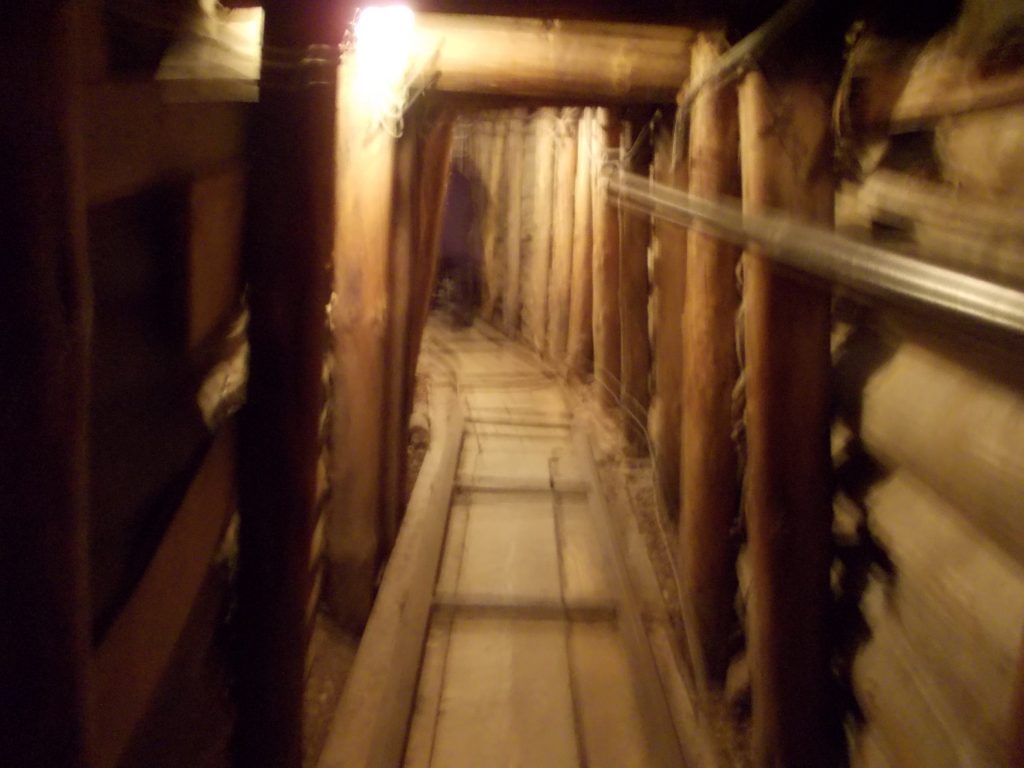
In times of impeding crisis, it’s worth reaching for the experiences from attempts at survival in situations of total crisis which don’t go that far back. One such great challenge for the nations of former Yugoslavia were the wars started after Yugoslavia’s breakup. The civil war which took place between 1991–1995 was the most bloody conflict in Europe since World War II. During this time, the part of former Yugoslavia that suffered the most was Bosnia and Hercegovina, an ethnically and religiously diverse republic located between Croatia and Serbia. One of the stages of this war was the siege of Sarajevo, which lasted 1430 days, from April 5th to February 29th 1996, and was led by the forces of the Serbian Republic and the Yugoslav People’s Army from the capital of Bosnia and Hercegovina against the majority, who wanted Bosnia and Herzegovina to be independent.
For the greater part of this siege, there was no electricity in the city, and people managed to sustain themselves thanks to the gardens surrounding their houses, green spaces in the city, and aid dropped by the army. In mid-1993 a 800 metre tunnel opened underneath the airport. It was the only route connecting the city under siege with the free part of the country inhabited by Bosnians. It allowed for them to transfer weapons and food.
One of the great figures of this siege was prof. Sulejman Redžić (1953-2014), a botanist who created shows on his radio station on how to enrich one’s diet by picking plants in the city, and then wrote a work that documented human nutrition during the siege. Sadly, this researcher was found dead in a forest near Sarajevo at the peak of his scientific career. The circumstances of his death are uncertain and may even point to political motives.
I first encountered Sulejman when reviewing his article. He then invited me to lecture as a guest at a plenary session of a conference he was organising. Spending time in Sarajevo, I heard many stories on how people coped with nutrition, both from Sulejman and his assistants as well as other Bosnians I had the chance to meet.
Life was really difficult. There was a shortage of everything. People ate whatever they could make out of airdropped pasta or powdered milk, they searched for nettles, and most of the space in gardens was taken up by vegetable patches. The first winter was the worst. There were even shortages of water and people hid from artillery fire in empty, unheated flats. Many people lost 20-30 kg of their body mass.
After surviving the first year and digging the tunnel, people started to cope better.
Here’s a link to an article on the use of wild plants for survival in Sarajevo:
Redžić, S., 2010. Use of wild and semi-wild edible plants in nutrition and survival of people in 1430 days of siege of Sarajevo during the war in Bosnia and Herzegovina (1992–1995). Collegium Antropologicum, 34(2), pp.551-570.
https://hrcak.srce.hr/file/85765
He later also wrote an article on the use of mushrooms and lichens in a different region of Bosnia and Hercegovina:
Redzic, S., Barudanovic, S. and Pilipovic, S., 2010. Wild mushrooms and lichens used as human food for survival in war conditions; Podrinje-Zepa Region (Bosnia and Herzegovina, W. Balkan). Human Ecology Review, pp.175-187.
Young leaves and stems were the most often eaten parts of plants. The most frequently eaten plants were: nettles (Urtica dioica), dandelions (Taraxacum officinale), coltsfoot (Tussilago farfara), common chicory (Cichorium intybus) and the common mallow (Malva sylvestris). Other often eaten species included the amaranth (Amaranths retroflexus), the common houseleek (Sempervivum tectorum), sorrel (Rumex patientia and R. acetosa), the common primrose (Primula vulgaris) and parsnip (Pastinaca sativa) roots. Other than that, they used the white clover (Trifolium repens), chickweed (Stellaria media), charlock mustard (Sinapis arvensis), wild radish (Raphanus raphanistrum), spotted dead-nettle (Lamium maculatum) as well as the bulbs of the Jerusalem artichoke (Helianthus tuberosus).
I was very moved by the conference in Sarajevo and my meetings with its inhabitants. I fell in love with the Balkans. Thanks to one conversation in the pub in the evening after lectures, with, among others, some researchers from Croatia, I started studying wild vegetables sold on the Dalmatian coast the following year. Since then I’ve gone to do research in The Balkans a few times a year, which, in the past few years, has been possible thanks to my NCN grant no. 2015/19/B/HS3/00471 entitled Traditional collection of wild edible plants on the islands of Dalmatia. Maybe now thanks to the quarantine in Europe I will find more time to write about this on my blog…

With prof. Sulejman Redžić in Blagaj, a dervish monastery near Mostar

Conference attendees – mainly researchers on medicinal plants in Balkan and Middle Eastern countries and Turkey

Tunnel connecting Sarajevo with the world during the siege
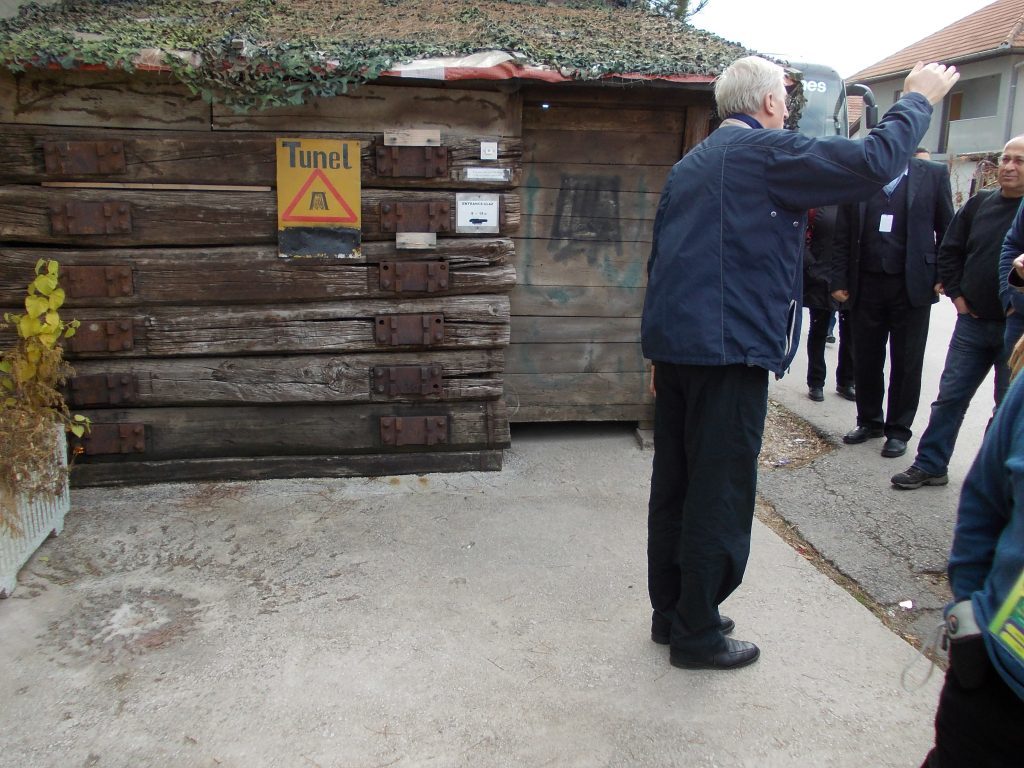
Prof. Redžić talks about crossing the tunnel

The recent coronavirus brought a lot of turmoil to economy. We are well aware that the economy is endangered with a total collapse. Apart from the extreme lack of clarity of the contemporary economic financial system the main reason is the danger that the supply chains will be broken – which can be compared with a heart attack or brain stroke. Supply of goods from China, supply of raw materials from Africa etc. Some of these supply chains cannot be easily changed e.g. concerning most specialized goods or rare materials. But many of them can. We just overlooked it outsourcing everything to cheaper places. Maybe we should make our economy more like a hologram? Like a holographic picture which contains the image even if you have a small piece of it? So that when a county is isolated most of its goods can still be produced in it? That is how it was in the past. There was a blacksmith in each large village, who could make an axe. Most homesteads produced their own food. Only very few materials were imported such as metals or salt.
It is however difficult to decide how such holographic properties of economy should be achieved. Probably the only way would be more frequent incidents of pandemics…
Applying holograms to security means in an ideal situation it would be good to have a second home in case (unaffordable for some, but see Scandinavian countries where it is often a norm to live in a city and have a second summer home), also some shelter in the woods and basic staff packed in a suitcase in case you have to suddenly escape somewhere far.
Apart from holograms I want you to look at fractals which actually have the features of holograms, they are self-similar. Fractal is (following Wikipedia): “a curve or geometrical figure, each part of which has the same statistical character as the whole. They are useful in modeling structures (such as snowflakes) in which similar patterns recur at progressively smaller scales, and in describing partly random or chaotic phenomena such as crystal growth and galaxy formation”. Nature likes fractals and many elements of nature have fractal structure, e.g. snowflakes, fern leaves, root systems. Now imagine that economy is a fractal. Any features in economy which are highly centralized, dominated by large corporations are not fractals. But now image the world in which there are large shops, medium shops, small shops and individual sellers selling a product. This is like a fractal. In this case if you shut a large shop to avoid the epidemic you can still go shopping to a small place. If you created monopolies or destroy small commerce and firms such a system is not resilient in times of crisis.
The pictures below show the most well-known example of a fractal, so called Sierpiński carpet (https://en.wikipedia.org/wiki/Sierpinski_carpet) and Sierpiński triangle (https://en.wikipedia.org/wiki/Sierpi%C5%84ski_triangle), invented by Polish mathematician, Wacław Sierpiński, a from the University of Warsaw.


Actually you should model your life like a fractal. You should have one or two main sources of income but also other minor possible ways of surviving. Main hobbies and secondary hobbies which can be taken up e.g. when you go to prison (learning Chinese characters is useful then as it will take you a few years). I am always amused by people asking me if I have a few good friends and loads of acquaintances. I say both as I try to apply fractal geometry to all aspects of my life.
This could also apply to medical systems. In order to survive in times of epidemics we need large hospitals but also a diversified care system. Small hospitals may be more resilient in times of epidemic – in case one is shut sue to infection, another nearby can still work. And that is why we need single medical practitioner in the countryside (I saw it in China where they would have a nurse or a doctor living in a really remote place) as well as good knowledge of medicinal herbs, most importantly those which are local and can be sourced from your garden or meadow. The population who have a sauna in each homestead and can produce home-made moonshine is also more resilient as strong spirits and heat can also be important in medicine.
By the way there are still very few applications of fractals in economy. But see this interesting article from Scientific American by Benoit Mandelbrot “How Fractals Can Explain What’s Wrong with Wall Street”:
https://www.scientificamerican.com/article/multifractals-explain-wall-street/
And see this paper:
Takayasu M, Takayasu H. Fractals and economics. Complex Systems in Finance and Econometrics. 2011:444-63.